Hey everyone! If you’re anything like me, you know that the automotive world is shifting gears faster than ever. What used to be simple wrench-turning is now a high-tech dance with diagnostics, electric powertrains, and complex software.
Keeping up, let alone getting ahead, means constantly honing those practical skills. I’ve been there, staring at a new system and wondering where to even begin with the hands-on work.
That’s why I’m always on the hunt for the best resources to truly *master* what’s under the hood, especially with the surge in EVs and advanced driver-assistance systems (ADAS) requiring a whole new level of precision and expertise.
It’s not just about theoretical knowledge anymore; it’s about getting your hands dirty and actually *seeing* how things work in real-world scenarios. Trust me, the right video can make all the difference when you’re trying to understand a tricky repair or preparing for a certification exam.
Ready to dive into some top-notch recommendations that will boost your practical skills and keep you at the forefront of automotive technology? Let’s get into the specifics!
Cracking the Code: Diagnostics in the Age of Software-Defined Cars
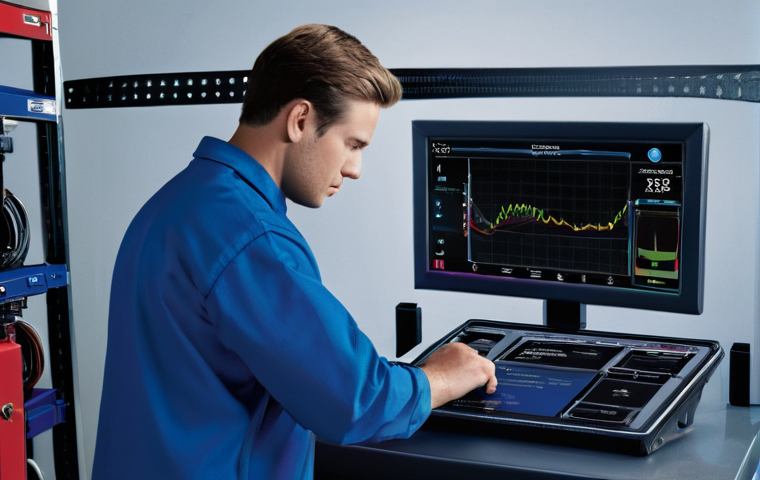
Honestly, the days of just listening for a knock or checking a fluid level as your primary diagnostic tools are largely behind us. Modern vehicles are essentially supercomputers on wheels, and I’ve found that truly understanding what’s going on under the hood now means diving deep into diagnostic software and data streams. When I first started encountering CAN bus issues or mysterious intermittent faults that a simple code reader couldn’t decipher, I felt like I was back in school, but without a textbook that truly captured the real-world messiness. That’s why hands-on video tutorials that walk you through interpreting live data, understanding PIDs (Parameter Identifiers), and even using advanced graphing functions on your scan tool are absolutely invaluable. It’s not just about pulling a code; it’s about connecting the dots, recognizing patterns, and isolating the root cause that might be hidden deep within layers of software logic. Trust me, spending a few extra minutes watching someone expertly navigate a diagnostic flow can save you hours of head-scratching later.
Mastering Your Scan Tool and Software
If you’re like me, you probably have a favorite scan tool, but are you really squeezing every drop of diagnostic power out of it? I used to think I knew my way around, but then I watched a series of videos that completely changed my perspective on navigating menu trees, customizing data PIDs, and even performing bidirectional controls I didn’t even realize were possible on certain modules. We’re talking about everything from initiating sensor calibrations to actuating solenoids, all from your fingertips. These aren’t just theoretical exercises; they’re practical applications that directly translate into faster, more accurate repairs in the bay. I remember a particularly stubborn misfire on a European sedan that stumped me for a good hour until I re-watched a video explaining how to use a specific manufacturer-level diagnostic software feature to monitor individual injector duty cycles in real time. Boom! Problem identified in minutes after that. It’s truly about knowing the capabilities of your equipment and leveraging them to their fullest extent. Don’t underestimate the power of watching an expert demonstrate these tools.
Decoding Complex Data Streams and Communication Protocols
Modern vehicles communicate like a bustling network, and sometimes it feels like you need a translator just to keep up. I’ve spent countless hours trying to make sense of cryptic diagnostic trouble codes (DTCs) that don’t seem to point to any obvious culprit. That’s where understanding data streams and communication protocols like CAN (Controller Area Network) or LIN (Local Interconnect Network) becomes critical. Video resources that visually explain how these networks operate, how data packets are sent, and what to look for when a module isn’t communicating properly are gold. I’ve personally gained so much from seeing demonstrations of using an oscilloscope to analyze network signals, identifying waveform anomalies that indicate a short or an open circuit. It takes the abstract concept of data flow and makes it tangible. For example, a video showing how to isolate a faulty module by systematically disconnecting components from the CAN bus, while monitoring network integrity, was a game-changer for me on a particularly challenging vehicle with multiple communication errors. It’s a bit like learning a new language, but absolutely essential for today’s technician.
Powering Up: Getting Real with Electric Vehicle Systems
Let’s be honest, the switch to electric vehicles isn’t just a trend; it’s a monumental shift in automotive technology that demands a whole new set of skills. When I first started working on EVs, I felt a mix of excitement and apprehension. High voltage systems are no joke, and safety protocols are paramount. What I quickly realized is that while some core diagnostic principles remain, the components and their interactions are vastly different. Forget spark plugs and oil changes; we’re talking about battery management systems, electric motor control, and regenerative braking. This is where high-quality video instruction really shines because it can safely demonstrate procedures that would be extremely hazardous in a real-world, unsupervised setting. I recall a specific incident where I was troubleshooting a charging issue on a popular EV model. Watching a detailed video that broke down the entire charging circuit, from the charging port to the onboard charger and then to the battery pack, helped me pinpoint a faulty relay that I might have otherwise overlooked. It’s about gaining confidence and competence in a rapidly evolving landscape.
Safe Practices for High-Voltage Systems
Working with high-voltage (HV) systems in electric vehicles is probably the single most critical area where practical, visual guidance is indispensable. I cannot stress enough how important it is to strictly adhere to safety protocols, and watching them demonstrated correctly makes all the difference. Videos that clearly illustrate the proper Lock Out/Tag Out procedures, how to safely de-energize an HV battery pack, and the correct use of insulated tools and personal protective equipment (PPE) are not just helpful; they are non-negotiable for your safety and the safety of your colleagues. I remember a video that emphasized testing for zero potential *multiple times* after de-energizing, even showing common mistakes people make. That visual reinforcement helped ingrain those critical steps in my mind, making me much more methodical and confident. It’s not just about knowing the rules; it’s about seeing them put into action so you can replicate them flawlessly every single time. Never cut corners when dealing with several hundred volts, and let expert videos guide your every move.
Diagnosing and Repairing EV Powertrains and Batteries
The heart of any EV is its powertrain and battery system, and these components present unique diagnostic challenges. From understanding how the inverter converts DC power to AC for the electric motor, to pinpointing a faulty cell within a massive battery pack, the complexity can be daunting. I’ve personally benefited immensely from videos that delve into the specifics of motor control strategies, explaining things like stator and rotor windings, and how Hall effect sensors contribute to precise motor operation. Then there are the batteries – an entire ecosystem of cells, modules, and a sophisticated Battery Management System (BMS). Videos that show real-world scenarios of checking cell voltages, performing insulation resistance tests, and even the careful, precise process of replacing individual battery modules (often a dealer-level task, but invaluable to understand) are incredibly enlightening. One time, I was scratching my head over an intermittent range reduction on an EV until a video tutorial showed me how to access specific BMS data parameters that indicated a slight imbalance in a particular battery module. It was an “aha!” moment that highlighted the depth of knowledge required for these cutting-edge systems.
Seeing the Road Ahead: A Deep Dive into ADAS Calibration
Advanced Driver-Assistance Systems (ADAS) have moved from luxury features to standard equipment on many new vehicles, and if you’re not up to speed on their calibration, you’re missing a huge piece of the repair pie. I’ve seen firsthand how a seemingly minor fender bender can turn into a complex, precision job requiring specialized tools and software just to get the ADAS features working correctly again. It’s not like the old days of just replacing a bumper and being done with it. Now, that bumper might house radar sensors, or the windshield might have a camera that needs perfect alignment. The accuracy required for these systems to function safely is incredible, and trying to learn it all from a manual can be mind-numbing. Visual aids, particularly videos that demonstrate the precise setup and execution of calibration procedures, are absolutely essential for confidence and accuracy. I’ve often referred back to specific video guides before tackling a front radar calibration, ensuring I have the correct targets and the vehicle is positioned exactly right. It’s about achieving that millimeter-level precision that these systems demand.
Understanding Sensor Technologies and Their Placement
Before you even think about calibrating, you need to know what you’re working with. Modern vehicles are laden with an array of sensors: radar, lidar, ultrasonic, and various types of cameras. Each has a specific function and a precise mounting location. I found that videos explaining the principles behind each sensor technology – how radar uses radio waves, how lidar uses pulsed lasers, or how cameras interpret visual data – really helped solidify my understanding. More importantly, seeing detailed visual guides on where these sensors are typically located on different vehicle makes and models, and how to properly remove and reinstall them without causing further damage, has been incredibly beneficial. For instance, knowing that a forward-facing camera often requires specific cleaning procedures or that a rear radar sensor might be tucked behind a bumper cover and require a specific torque sequence for reinstallation, comes largely from these visual learning experiences. It’s the foundational knowledge that prevents costly mistakes before you even get to the calibration phase.
Precision Calibration Procedures for ADAS Components
This is where the rubber meets the road, or rather, where the targets meet the shop floor. ADAS calibration is all about precision. Whether it’s a static calibration requiring specific patterns and measurements in front of the vehicle, or a dynamic calibration that involves driving the vehicle under specific conditions, the steps must be followed exactly. I’ve watched countless videos detailing the proper setup for camera calibrations, including measuring distances to targets, ensuring a level surface, and using specialized alignment equipment. The visual demonstration of these steps, especially the critical measurements and software interactions, is far superior to trying to decipher complex written instructions. I vividly recall a time I was performing a blind-spot monitor radar calibration and was struggling with the target placement. A quick review of a video showed a slightly different, more efficient way to position the reflective targets that made all the difference, allowing the calibration to complete successfully on the first attempt. These videos offer invaluable “over-the-shoulder” guidance that you just can’t get from a textbook.
Hybrid Harmony: Understanding Complex Integrated Systems
Hybrid vehicles often feel like they bridge the gap between traditional combustion engines and full EVs, creating a unique set of diagnostic challenges. You’re not just dealing with one power source; you’re dealing with an intricate dance between a gasoline engine, electric motor(s), and a battery pack, all orchestrated by sophisticated control units. When I first started encountering hybrids, I felt like I needed a cheat sheet just to keep track of the different modes of operation: EV mode, engine assist, regenerative braking, and so on. It’s a lot to wrap your head around! This complexity makes visual learning an absolute lifesaver. Videos that meticulously break down the power flow in various driving conditions, explain the interaction between the different high-voltage components and the 12V system, and demonstrate diagnostic strategies for these integrated systems are incredibly helpful. I remember one particular instance where a customer complained about poor fuel economy in their hybrid SUV. A video showcasing how to monitor the state of charge (SOC) of the HV battery and its direct impact on when the engine kicks in gave me the insight to quickly identify an issue with the regenerative braking system that wasn’t efficiently recapturing energy.
Deciphering Hybrid Power Flow and Operating Modes
The core of understanding a hybrid vehicle lies in comprehending how and when power is routed from its different sources. It’s a dynamic system, constantly shifting between electric power, gasoline power, or a combination of both. I’ve found that animated diagrams and real-world demonstrations in videos are incredibly effective at illustrating these power flow changes in various driving scenarios – starting from a stop, accelerating, cruising, and braking. They show you exactly when the electric motor is assisting, when the engine is charging the battery, and how regenerative braking works to recapture energy. This visual understanding makes troubleshooting much more intuitive. For example, when a hybrid isn’t seamlessly transitioning between modes, I can now much more easily pinpoint whether the issue is with the inverter, the motor/generator, or the high-voltage battery. These videos explain why certain fault codes might appear and how they relate to the overall power management strategy, giving me a clearer path to diagnosis instead of just guessing.
Navigating Regenerative Braking and Energy Management
Regenerative braking is a cornerstone of hybrid efficiency, but it’s also an area that can throw a wrench into traditional brake diagnostics. It’s not just about friction anymore; it’s about how the electric motor slows the vehicle and converts kinetic energy back into electrical energy for the battery. I’ve personally learned a ton from videos that explain the intricacies of this system, demonstrating how the vehicle’s control unit blends regenerative braking with conventional hydraulic braking. It’s crucial to understand how to properly inspect and service these blended systems, recognizing when a braking issue is mechanical versus electrical, or related to the energy recovery process. Furthermore, videos on battery energy management, detailing how the BMS balances cell voltages, monitors temperature, and protects the battery from overcharging or deep discharge, are essential for ensuring the longevity and performance of the HV battery. This holistic view, often gained through detailed visual explanations, helps me diagnose issues that affect both performance and safety in these sophisticated vehicles.
Unraveling Automotive Electronics: From Wiring to Modules
Let’s be real, automotive electronics can feel like a tangled mess sometimes. What used to be simple circuits with a fuse and a switch has evolved into intricate networks of modules, sensors, and actuators all talking to each other. I’ve definitely had my share of frustrating moments tracing wires or trying to figure out why a particular component isn’t getting power or ground. That’s why having solid video resources that demystify wiring diagrams, explain circuit theory in a practical way, and show you how to effectively use tools like a multimeter or an oscilloscope is an absolute game-changer. It’s not just about seeing the diagram; it’s about understanding how to interpret it and apply that knowledge to the actual vehicle. I distinctly remember struggling with an intermittent headlight issue on a customer’s car until I watched a video that broke down how to test for voltage drop across a seemingly good wire, revealing corrosion I couldn’t visually detect. It taught me to go beyond just checking for continuity and truly understand circuit integrity.
Demystifying Wiring Diagrams and Circuit Tracing
Wiring diagrams are the roadmap of a vehicle’s electrical system, but sometimes they look like a foreign language. I’ve spent many hours poring over schematics, trying to make sense of symbols and lines. Videos that visually walk you through how to read and interpret these diagrams – explaining common symbols, understanding ground points, power distribution, and component locations – are incredibly valuable. More importantly, seeing someone expertly trace a circuit from the power source through switches, fuses, and modules, all the way to the component and back to ground, provides a practical perspective that a static diagram simply can’t offer. I recall a specific video showing how to use a power probe to inject voltage or ground into a circuit for testing, which not only sped up my diagnostic time but also taught me safer ways to test certain components. It’s like having an experienced mentor right there with you, pointing out exactly what to look for and how to think through the electrical flow. This hands-on, visual approach truly transforms the often-daunting task of electrical diagnosis into something manageable and even enjoyable.
Mastering Multimeter Usage and Advanced Electrical Diagnostics
Your multimeter is your best friend when it comes to electrical work, but are you really using it to its full potential? I used to just check for voltage and continuity, thinking I had it all covered. Then I started watching videos that demonstrated advanced multimeter functions, like checking for resistance in components, performing voltage drop tests, and even measuring current draw with an inductive clamp. These weren’t just theoretical explanations; they were practical demonstrations on actual vehicle circuits, showing common pitfalls and how to interpret different readings. For instance, a voltage drop test demonstrated on a starter circuit revealed a bad battery cable that was causing a no-crank condition, even though the battery itself tested fine. It really opened my eyes to the nuances of electrical diagnosis. And if you want to level up, videos on using an oscilloscope to analyze waveforms – checking sensor outputs, injector patterns, or network communication – are next-level. Seeing an expert interpret these complex patterns on a screen can turn confusing squiggles into clear diagnostic answers, making you a true electrical wizard in the shop.
| Diagnostic Tool/Skill | Key Practical Application | Benefit to Technician |
|---|---|---|
| Advanced Scan Tool Operation | Live data interpretation, bidirectional controls, PID analysis | Faster, more accurate root cause identification, reduced diagnostic time |
| High-Voltage Safety Protocols | Lock Out/Tag Out, PPE usage, safe de-energization | Ensures personal safety and compliance, prevents costly accidents |
| ADAS Calibration Equipment | Target setup, precise measurements, software interaction | Accurate sensor alignment, safe and effective ADAS functionality |
| Multimeter & Oscilloscope | Voltage drop tests, current draw, waveform analysis | Deep electrical fault finding, diagnosing intermittent issues |
| Wiring Diagram Comprehension | Circuit tracing, power/ground identification, component location | Systematic electrical troubleshooting, efficient repair planning |
Sharpening Your Skills: Practical Tips for Shop Success
Beyond the high-tech diagnostics and specialized repairs, there are fundamental shop skills and best practices that truly set a great technician apart. I’ve found that even with all the advancements, the basics never really go out of style. Things like proper tool usage, efficient workflow, and maintaining a clean and organized workspace directly impact your productivity, accuracy, and even your safety. When I first started out, I probably spent too much time fumbling for the right wrench or trying to figure out the most logical sequence for a complex disassembly. Over time, watching experienced technicians in action, especially through detailed video demonstrations, has helped me streamline my processes and develop a more methodical approach to every job. It’s not just about knowing *what* to do, but *how* to do it smartly and efficiently. These practical, often unspoken, skills are what make the difference between a good tech and a truly exceptional one, maximizing both your output and your confidence on the job.
Ergonomics and Efficient Workflow Strategies
Working in an automotive shop can be physically demanding, and believe me, your body will thank you for adopting good ergonomic practices. I’ve learned the hard way that hunching over an engine for hours or using improper lifting techniques can lead to chronic pain. Videos demonstrating proper posture, effective use of shop equipment (like lifts and transmission jacks), and even simple stretching exercises can make a huge difference in your long-term comfort and health. Beyond ergonomics, efficient workflow is key. I’ve watched countless videos that highlight techniques for organizing tools, preparing parts before a repair, and establishing a logical sequence of operations for common jobs. It sounds simple, but observing how an expert lays out their tools for an engine swap or systematically approaches a complex wiring repair can shave hours off a job and prevent unnecessary backtracking. It’s about working smarter, not harder, and these visual guides really help you visualize and adopt those efficient habits. My own shop time has significantly improved by implementing some of these seemingly small but impactful changes.
Tool Care, Maintenance, and Advanced Shop Techniques
Your tools are an extension of your hands, and keeping them in top condition is absolutely essential for both efficiency and safety. I used to be a bit haphazard with my tool care, but after seeing how meticulously some professional technicians maintain their equipment in online videos, I completely changed my tune. From proper cleaning and lubrication of air tools to calibrating torque wrenches and inspecting lifting equipment, these maintenance routines are crucial. Furthermore, videos often showcase advanced shop techniques that you might not learn in a formal setting. We’re talking about things like precise drilling methods for broken bolts, specialized welding techniques for automotive applications, or even creative solutions for removing seized components without causing further damage. I particularly remember a video demonstrating a clever trick for extracting a rounded-off bolt using a specific type of impact socket and a bit of heat, which saved me from having to drill it out. These are the “insider secrets” that experienced technicians often share visually, helping you expand your repertoire and tackle even the toughest challenges with confidence and skill.
Concluding Thoughts
Whew, what a journey we’ve taken through the ever-evolving world of automotive diagnostics! From the complex data streams of software-defined cars to the electrifying challenges of EVs, the precision demands of ADAS, and the intricate dance of hybrid systems, it’s clear that staying ahead in this industry is a continuous learning process.
I truly believe that the key to unlocking consistent success and job satisfaction lies in embracing new knowledge and refining your skills, especially through practical, visual learning.
I’ve personally felt the shift from scratching my head over a mysterious fault to confidently pinpointing the issue, and that transformation often came from seeing an expert demonstrate the solution.
It’s not just about fixing cars; it’s about continuously growing, adapting, and finding that ‘aha!’ moment that makes all the hard work worthwhile. Keep learning, keep experimenting, and keep pushing your boundaries – the rewards are immense, both professionally and personally.
Useful Information to Know
1. Invest in Continuous Learning: The automotive industry changes at lightning speed. Dedicate time each week to watching diagnostic videos, reading technical bulletins, and exploring manufacturer-specific training modules. This proactive approach ensures you’re never caught off guard by new vehicle technologies and helps you maintain your edge in a competitive field. It’s an investment that pays dividends in both efficiency and expertise.
2. Master Your Scan Tool’s Full Capabilities: Don’t just use your scan tool for pulling codes. Dive into its advanced functions like live data graphing, bidirectional controls, and special test routines. Many technicians only scratch the surface of what their tools can do, missing out on powerful diagnostic capabilities that can dramatically cut down troubleshooting time. Experiment with different PIDs and observe how they correlate with vehicle behavior.
3. Prioritize High-Voltage Safety: When working with electric or hybrid vehicles, safety isn’t just a recommendation; it’s an absolute requirement. Always follow proper Lock Out/Tag Out procedures, use appropriate Personal Protective Equipment (PPE), and double-check for zero potential. Familiarize yourself with emergency response guides for EVs. One slip-up can have severe, life-altering consequences, so never take shortcuts.
4. Network with Other Technicians: You’re not alone in tackling complex automotive problems. Join online forums, attend industry events, or even just chat with experienced colleagues. Sharing insights, asking questions, and learning from others’ triumphs and failures can provide invaluable perspectives and shortcuts that you might not discover on your own. Sometimes, a fresh pair of eyes or a different approach is all it takes to solve a stubborn issue.
5. Understand the “Why” Behind the “How”: Don’t just follow repair steps blindly. Take the time to understand the underlying principles of how a system works. Why does an ADAS camera need calibration? How does a hybrid battery management system maintain cell balance? This deeper comprehension allows you to diagnose more effectively when faced with unusual faults, rather than just relying on rote procedures, making you a true problem-solver.
Key Takeaways
The modern automotive landscape demands a technician who is part mechanic, part IT specialist. Success hinges on a deep understanding of diagnostic software, electrical systems, and cutting-edge technologies like EVs and ADAS.
Prioritizing safety, especially with high-voltage systems, is non-negotiable. Continuous learning through hands-on demonstrations and practical skill development is crucial for keeping pace with rapid technological advancements.
Finally, embracing tools to their fullest potential, fostering an efficient workflow, and focusing on thoroughness will distinguish you as an expert in today’s sophisticated automotive repair environment.
Frequently Asked Questions (FAQ) 📖
Q: How can I truly build practical, hands-on skills, especially with all the new electric vehicle (EV) and advanced driver-assistance systems (
A: DAS) technology emerging so rapidly? A1: This is such a fantastic question, and honestly, it’s one I get all the time! From my own journey, the biggest game-changer for practical skills has always been getting your hands dirty, literally.
Theory is great, but nothing beats actual interaction. For EVs and ADAS, this often means seeking out specialized training. I’ve personally found immense value in workshops and technical schools that offer dedicated programs.
Look for courses that include lab time with actual vehicles or simulators. Many community colleges and private training centers have invested heavily in EV and ADAS training rigs, which are perfect for safe, controlled learning.
Beyond formal education, don’t underestimate the power of starting small. If you can, get your hands on an older, less complex system (perhaps a non-critical component from a salvage yard) and just start disassembling and reassembling it.
Understanding the basics of how components are fitted and secured gives you a fantastic foundation before you tackle high-voltage systems or complex sensor calibration.
And a little secret from my experience? Shadowing an experienced technician who’s already proficient in these areas is invaluable. Observing their diagnostic process and repair techniques in a real shop environment accelerates your learning curve like nothing else.
Q: With so much information out there, what types of learning resources have you found most effective for truly mastering practical automotive skills beyond just theoretical knowledge?
A: Oh, I totally get the overwhelm! It feels like you could spend a lifetime just reading manuals. When it comes to practical skills, I’ve developed a few go-to resource types that have proven themselves time and again.
First up, high-quality video tutorials are non-negotiable. I’m talking about channels and platforms that show step-by-step procedures, common pitfalls, and the correct tools to use.
They often provide multiple camera angles and close-ups, which make a huge difference when you’re trying to visualize a complex maneuver or component placement.
Second, interactive diagnostic software and simulators are incredibly powerful. Many professional-grade diagnostic tools offer demo modes or training modules that let you “diagnose” virtual faults without risking damage to a real vehicle.
This builds critical thinking and problem-solving skills in a safe environment. Lastly, and this might sound old-school, but detailed service manuals (the actual ones, not just generic repair guides) are treasures.
They often contain exploded diagrams, torque specifications, and troubleshooting trees that are essential for precise, professional work. Combine these with some hands-on time, and you’re golden.
Q: How do I ensure I’m staying up-to-date with the latest automotive technologies and best practices, especially given how quickly everything is changing in the industry?
A: Keeping current in the automotive world truly feels like trying to catch a moving train, doesn’t it? But trust me, it’s absolutely doable and essential for anyone serious about this field.
My personal strategy involves a few key habits. Firstly, I subscribe to several industry-specific journals and online forums. These often share insights from leading engineers, updates on new vehicle releases, and discussions around emerging technologies like solid-state batteries or advanced ADAS sensor integration.
Secondly, attending virtual or in-person expos and trade shows is a must. Seeing the latest tools, equipment, and training solutions firsthand, and being able to chat with manufacturers and experts, is an incredibly rich learning experience.
I’ve picked up so many valuable insights and connections at these events! Finally, don’t underestimate the power of continuous certification. Many manufacturers and independent organizations offer tiered certifications for specific systems (like hybrid electric vehicles or specific ADAS platforms).
Pursuing these not only validates your skills but also forces you to learn the most current standards and repair methodologies. It’s a commitment, but the payoff in confidence and career advancement is huge.
📚 References
Wikipedia Encyclopedia
구글 검색 결과
구글 검색 결과
구글 검색 결과
구글 검색 결과
구글 검색 결과